You’ve probably heard someone mention a jogging stroller while you were already half-confused in a baby store aisle, staring at wheels like they might explain themselves if you looked long enough, and yeah, it kinda sticks in your head after that. You’re standing there thinking, “is this just a fancy stroller with big tires or am I missing something obvious?” — and honestly, you’re not alone in that.
Let’s untangle it, slowly, not in that robotic brochure way, but like someone who’s actually pushed one of these things while slightly out of breath and wondering if they made the right purchase.
So… What Is a Jogging Stroller?
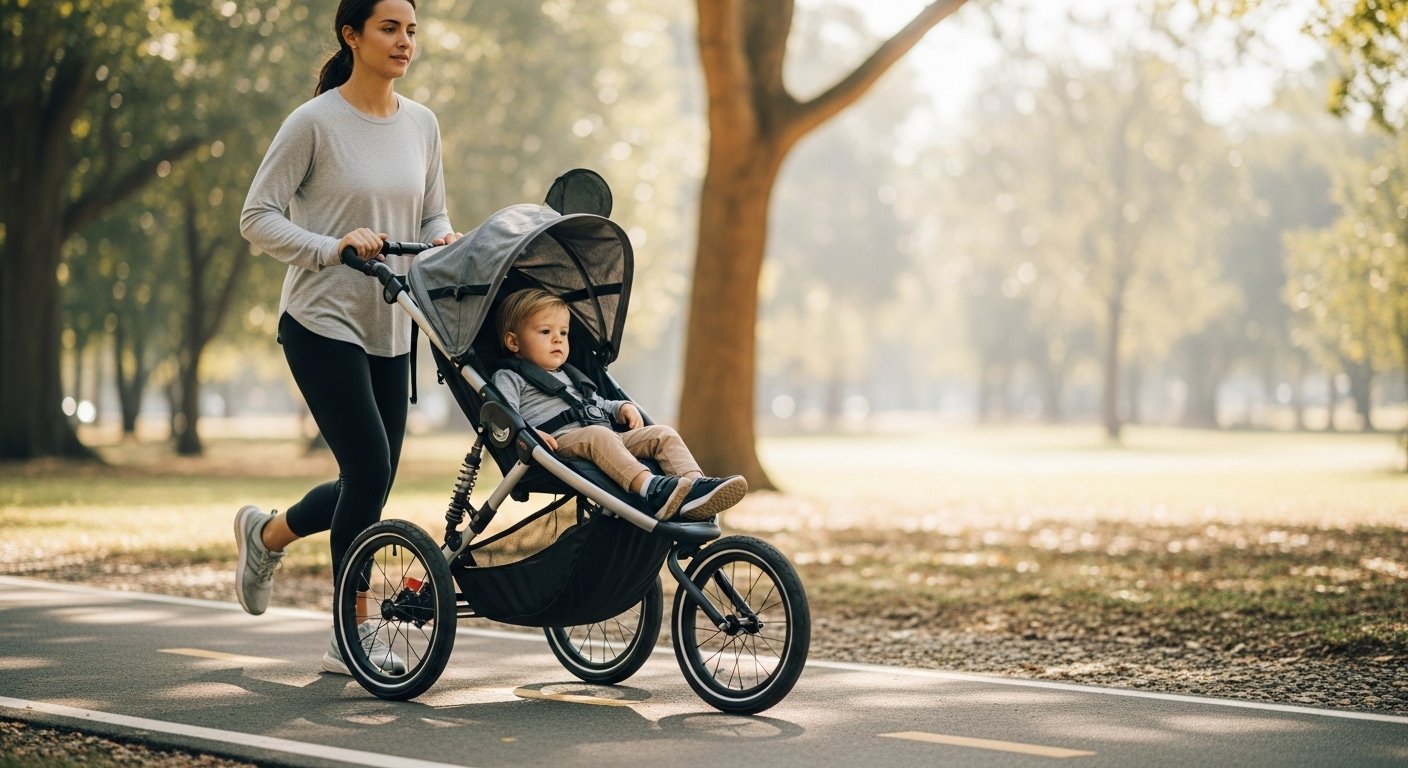
A jogging stroller is basically a stroller designed for parents who don’t just walk — they move faster than a polite stroll, whether that’s jogging, running, or just aggressively speed-walking because the baby finally fell asleep and you don’t wanna ruin it.
But saying that alone doesn’t quite hit it right. It’s not just about speed. It’s about stability when things get… bumpy, literally.
Unlike regular strollers (you know, the ones that feel like they might wobble if a leaf hits them wrong), jogging strollers come with:
- Three large, air-filled tires (two in the back, one in the front)
- Suspension systems (yes, like a mini car, kinda)
- A fixed or lockable front wheel
- Hand brakes, sometimes even wrist straps
And yeah, it sounds a bit over-the-top until you try pushing one over uneven ground and realize — oh, this is why.
Why Regular Strollers Just Don’t Cut It for Running
You might be thinking, “can’t I just jog with a normal stroller?” Technically, sure. But also… not really a great idea.
Regular strollers tend to have:
- Smaller plastic wheels
- No real suspension
- A swiveling front wheel that can go rogue mid-run
That last one? It matters more than you’d expect. Imagine jogging at a decent pace and suddenly the front wheel twists sideways because it hit a pebble. Yeah. Not fun.
Jogging strollers fix that by either locking the front wheel in place or designing it in a way that keeps it tracking straight. That alone changes everything.
Key Features of a Jogging Stroller (The Stuff That Actually Matters)
1. The Three-Wheel Design
It looks sporty, sure, but it’s not just for looks. The triangle shape gives better balance and control, especially when you’re moving faster than a casual stroll pace.
Also, those wheels are usually 12–16 inches in diameter. Big wheels roll over cracks, gravel, and uneven sidewalks way smoother than tiny ones.
2. Suspension System
This part gets overlooked until you push a stroller over a rough path and the baby doesn’t even flinch.
Jogging strollers often have built-in suspension that absorbs shock. Some higher-end models even let you adjust it based on your child’s weight, which sounds fancy but is actually really practical.
3. Safety Features
Safety isn’t just a checkbox here, it’s kinda the whole deal.
Most jogging strollers include:
- A five-point harness (like a car seat)
- A wrist strap (so the stroller doesn’t roll away if you trip)
- Hand brakes for downhill control
And yeah, going downhill without a brake system is… not something you wanna experiment with.
4. Fixed or Lockable Front Wheel
This is one of those features that seems minor until it’s not.
- Fixed wheel = best for straight running
- Swivel + lock option = more versatile for everyday use
If you plan to use the stroller for both jogging and normal errands, the lockable option is usually the sweet spot.
Who Actually Needs a Jogging Stroller?
Here’s where it gets a bit personal.
Not everyone needs one, honestly. If your idea of movement is mostly short walks in smooth areas, a regular stroller works fine.
But you might want a jogging stroller if:
- You like running or jogging regularly
- You walk on uneven terrain (parks, trails, broken sidewalks)
- You want something that feels stable at higher speeds
- You’re tired of feeling like your stroller might tip if you sneeze
And sometimes, it’s not even about jogging. A lot of parents buy these just for the smoother ride and better control.
When Can You Start Using One?
This is where people mess up a bit, not intentionally, just… not knowing.
Most pediatricians suggest waiting until your baby is around 6 to 8 months old before using a jogging stroller for actual running. That’s when they have enough neck and head control.
Before that, you can still use it for walking — just not high-speed jogging.
Some brands offer car seat adapters for newborns, which is convenient, but again, not for running. It’s more like… a temporary workaround.
Pros and Cons (Because Nothing Is Perfect)
Let’s be honest for a second — jogging strollers are great, but they’re not magic.
Pros
- Smooth ride on rough surfaces
- Better stability at higher speeds
- Durable build (they last longer than cheaper strollers)
- Often more comfortable for the child
Cons
- Bulkier and heavier
- Harder to fold and store
- More expensive (some go well over $300–$600)
- Not ideal for tight indoor spaces or crowded malls
You kinda trade convenience for performance, in a way.
Jogging Stroller vs Regular Stroller (Quick Comparison)
| Feature | Jogging Stroller | Regular Stroller |
|---|---|---|
| Wheels | Large, air-filled | Small, plastic or foam |
| Stability | High | Moderate |
| Terrain Handling | Rough & uneven | Smooth surfaces only |
| Weight | Heavier | Lightweight |
| Foldability | Less compact | More compact |
| Price | Higher | Varies (often cheaper) |
Looking at it like this makes it a bit clearer why people pick one over the other.
Are Jogging Strollers Worth It?
This is one of those questions where the answer depends on your lifestyle more than anything else.
If you’re someone who actually plans to jog regularly, then yeah, it’s absolutely worth it. It makes the whole experience safer and, weirdly, more enjoyable.
But if you just liked the look of it in a store and imagined yourself jogging but realistically won’t… then maybe not. They take up space, cost more, and can feel like overkill.
It’s kinda like buying running shoes and never running — they’re great shoes, just… not used the way they were meant to be.
Real-World Example (Because This Helps More Than Specs)
A study published in the Journal of Physical Activity and Health found that parents who used jogging strollers were more likely to meet recommended physical activity levels compared to those who didn’t.
That doesn’t mean the stroller magically makes you fit, obviously. But it removes a big barrier — the “I can’t leave the baby alone” problem.
And honestly, that’s a pretty big deal.
Tips Before You Buy One
If you’re leaning toward getting a jogging stroller, don’t just grab the first one that looks rugged.
Think about:
- Your terrain: Pavement vs trails makes a difference
- Storage space: These things are not tiny
- Fold mechanism: Some are annoyingly complicated
- Weight capacity: If you plan to use it for years
Also, test it if you can. Push it around. Turn corners. Try folding it. What looks good online can feel totally different in real life.
Final Thoughts (Without Sounding Like a Sales Pitch)
So yeah, what is a jogging stroller? It’s not just a stroller with bigger wheels, even though it kinda looks like that at first glance. It’s built for movement that’s faster, rougher, and a bit more demanding — both for you and for the kid sitting in it.
If you’re already the kind of person who hates being stuck inside and needs that bit of motion to feel normal, then it makes a lotta sense. If not, it might just sit there looking impressive while you use something smaller and easier.
And honestly, either choice is fine. You don’t need to turn every walk into a workout unless you actually want to.