So you’re here wondering when can baby sit in front facing stroller, probably because your little one has started craning their neck like a tiny owl every time you push them around, and yeah… it feels like they’re ready for more than just staring at your shirt. You’re not wrong to think that, but also not entirely right either, which is where things get slightly annoying and a bit more nuanced than stroller brands make it seem.
Let’s talk about it properly, without the vague “around 6 months” shrug that people throw at you like it’s gospel.
Why Babies Even Face Forward in the First Place
You’d think it’s just about giving them a better view, right? And yeah, partly. But there’s more going on under the hood of that tiny developing brain.
When babies start facing outward in a stroller, they’re suddenly exposed to a flood of sensory input—colors, movement, strangers doing strange things, the occasional barking dog that seems way too loud. It’s like switching from a quiet podcast to a chaotic street market.
Some experts in child development (like pediatric occupational therapists) often mention that controlled exposure to the environment helps cognitive growth, but—and this is a big but—it has to match their developmental readiness.
Too early, and it’s less “stimulating” and more “overwhelming chaos”.
So… When Can Baby Sit in Front Facing Stroller?
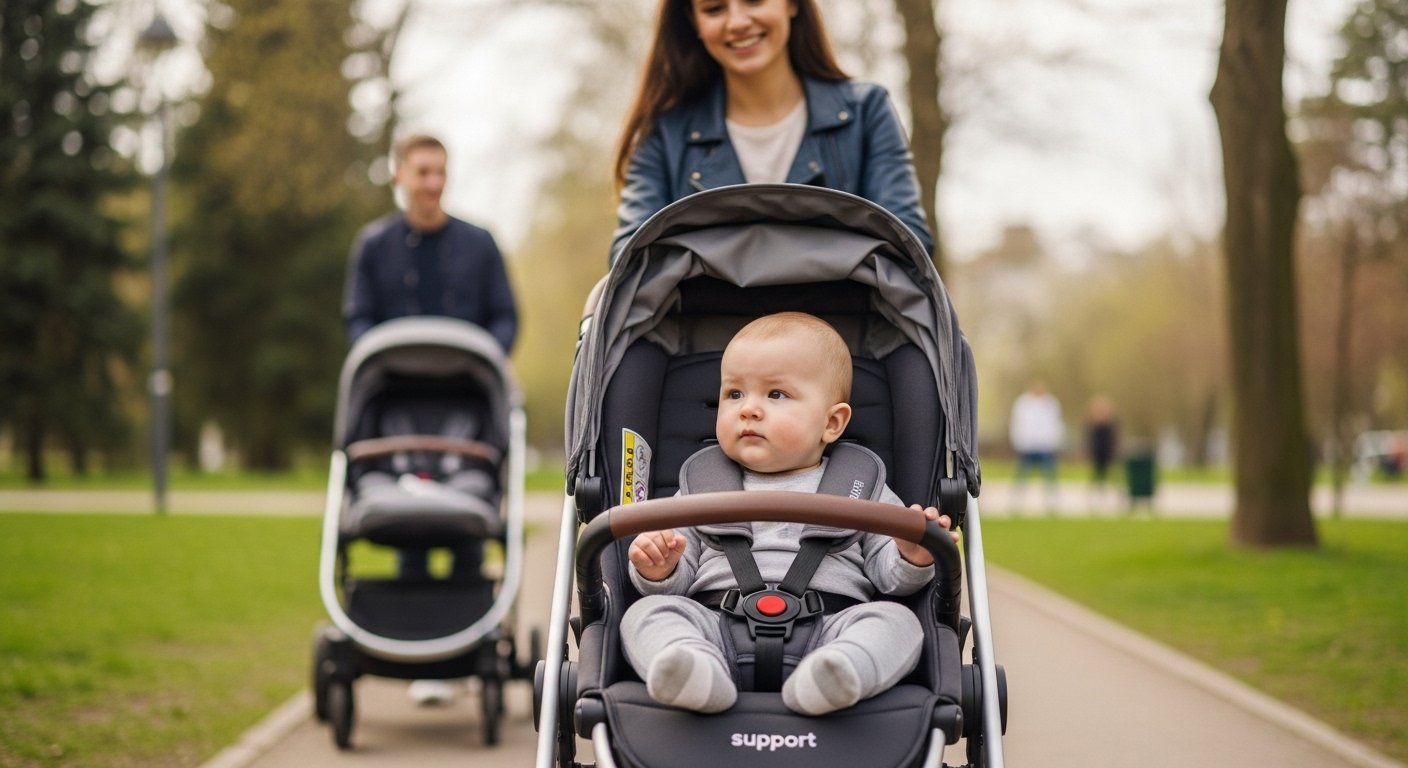
Short answer? Most babies are ready somewhere between 5 to 7 months old, but that range is kinda loose and depends heavily on your baby—not your neighbor’s baby who apparently was “walking at 6 months” (sure, Karen).
Signs Your Baby Might Be Ready
Instead of focusing purely on age, watch for these signals:
- Strong neck control (they can hold their head steady without wobbling like jelly)
- Sits with minimal support (not full independence, but close-ish)
- Shows curiosity about surroundings
- Doesn’t slump forward in seated positions
If your baby still folds like a sleepy sandwich in the stroller, it’s probably too soon.
A Quick Reference Table
| Development Skill | Why It Matters for Front Facing |
|---|---|
| Neck stability | Prevents strain and discomfort |
| Core strength | Helps them sit upright safely |
| Visual tracking | Allows engagement with surroundings |
| Emotional tolerance | Avoids overstimulation meltdowns |
And yeah, emotional tolerance is a thing—even for babies. You’ll notice it fast if they ain’t ready.
Why Facing Parent First Still Matters (Even If It Feels Boring)
There’s this weird rush to flip babies outward like it’s some milestone you gotta unlock quickly, but actually, parent-facing positions serve a pretty big purpose early on.
When your baby faces you:
- They read your facial expressions constantly
- They feel secure and regulated
- You can respond faster if they’re uncomfortable
Some child psychologists loosely tie this phase to early attachment patterns. It’s not something you need to overthink, but it does mean flipping them forward too soon just because they look bored might not be the best move.
Risks of Switching Too Early (yeah, there are a few)
Let’s not dramatize it, but also don’t ignore it.
Putting a baby in a front-facing stroller before they’re ready can lead to:
- Poor posture support → slouching, strain
- Overstimulation → sudden crying fits outta nowhere
- Reduced interaction with you → less bonding during walks
- Neck fatigue → especially during longer outings
One pediatric guideline often echoed is that babies need the ability to control their head for extended periods before facing forward comfortably. That’s not always present at exactly 6 months, despite what blogs say.
Types of Strollers Matter More Than You Think
Not all strollers are created equal, and some kinda pretend to support front-facing earlier than they actually should.
Reversible Seat Strollers
These are the gold standard for flexibility.
- You can switch between parent-facing and forward-facing
- Ideal for gradually transitioning your baby
- Often have better seat support
Umbrella Strollers
Lightweight, cheap, and… not great for early front-facing.
- Limited recline options
- Minimal support
- Better for older babies (8+ months usually)
Travel Systems
These usually include infant car seats and stroller bases.
- Most are rear-facing only in early months
- Transition to front-facing comes later with seat upgrades
If your stroller seat doesn’t offer good recline or padding, then even if your baby technically meets the age, it might still not be comfy enough.
How to Transition to Front Facing Without Regret
Don’t just flip the seat one day and call it a milestone. Babies aren’t that predictable, and honestly they might hate it at first.
Try easing into it:
Step-by-Step Approach
- Start with short walks
Like 10–15 minutes, not a full shopping trip - Watch their reactions closely
Fussing, turning back, zoning out = maybe not ready - Alternate positions
One walk facing you, next one facing out - Choose calm environments first
Quiet parks > noisy streets
You’ll kinda feel when it clicks. There’s no dramatic moment, just… less fussing, more curiosity.
Real Parent Observations (not the sugar-coated kind)
A lotta parents notice the same pattern:
- First attempt → baby confused or mildly panicked
- Second attempt → tolerates it
- Third attempt → suddenly fascinated by literally everything
One mom shared in a parenting group (not a study, just lived experience):
“At 6 months she hated facing forward. At 7 months she wouldn’t stop staring at dogs and trees like she discovered the universe.”
That shift? Totally normal.
Common Myths About Front Facing Strollers
Let’s clear up some stuff that keeps floating around.
“If they can sit, they’re ready”
Not always. Sitting independently is just one piece of the puzzle. Neck strength and emotional readiness matter too.
“Babies get bored facing parents”
They don’t, actually. They’re studying you like you’re the main character in their world. You just don’t notice it.
“Earlier exposure makes them smarter”
There’s no solid evidence that facing forward earlier boosts intelligence. Development isn’t a race, even if Instagram makes it feel like one.
What Pediatric Experts Usually Suggest
While recommendations vary a bit, most pediatricians loosely agree on this:
- Around 6 months is a general guideline, not a rule
- Readiness matters more than exact age
- Gradual transition is better than sudden switch
Organizations like pediatric associations often emphasize posture, safety, and emotional comfort over hitting a milestone quickly.
Signs You Should Wait a Bit Longer
Sometimes your baby will tell you (in their own dramatic ways) that they’re not ready.
Look for:
- Slumping or leaning sideways
- Constant fussiness when facing forward
- Avoiding eye contact or appearing overwhelmed
- Falling asleep unusually fast (a sneaky overstimulation sign)
If you see these, just switch back. No harm done.
Practical Tips for Parents (because real life ain’t theoretical)
- Bring a small toy or familiar object when trying front-facing
- Avoid crowded places at first
- Keep walks shorter than usual
- Don’t compare your baby’s timeline to others
And honestly, trust your gut more than random timelines on the internet. Babies don’t read guidelines, unfortunately.
Final Thoughts on When Can Baby Sit in Front Facing Stroller
So yeah, when can baby sit in front facing stroller? Somewhere around that 5–7 month window, but really… it’s when your baby stops feeling like a floppy noodle and starts acting like a curious little explorer.
You’ll notice it. It’s not subtle forever.
The key thing is not rushing it just because it feels like the “next step.” There isn’t some invisible reward for flipping the seat early. If anything, taking it slow tends to make the transition smoother for both of you.
And if your baby still prefers staring at you instead of the outside world for a bit longer? That’s not a delay. That’s just them being exactly where they’re supposed to be, even if it doesn’t look exciting from the outside.